H H D
Hook and Loop Fastener vs Traditional Fastening Methods: How to Choose the Right Solution?
2024-09-09
Introduction
Selecting the right fastening system is an important decision for product designers, manufacturers, and engineers.
Different applications require different fastening characteristics, including:
▪ Fastening strength
▪ Opening and closing frequency
▪ Adjustment flexibility
▪ Product appearance
▪ Manufacturing efficiency
▪ Service life
Traditional fastening methods such as buttons, zippers, and snaps have been widely used in clothing, bags, medical products, and industrial applications.
However, with the development of modern manufacturing, many industries now require fastening solutions that are faster, more flexible, and easier to maintain.
Hook and loop fasteners have become an increasingly popular alternative because they provide:
▪ Quick attachment and release
▪ Adjustable positioning
▪ Lightweight structure
▪ Reusable performance
▪ Easy installation
As an experienced hook and loop manufacturer, we provide various fastening solutions, including nylon hook and loop, polyester hook and loop, adhesive hook and loop, and customized industrial fastening products.
This article explains the differences between hook and loop fasteners and traditional fastening methods, helping customers select the most suitable solution for their applications.
What Is a Hook and Loop Fastener?
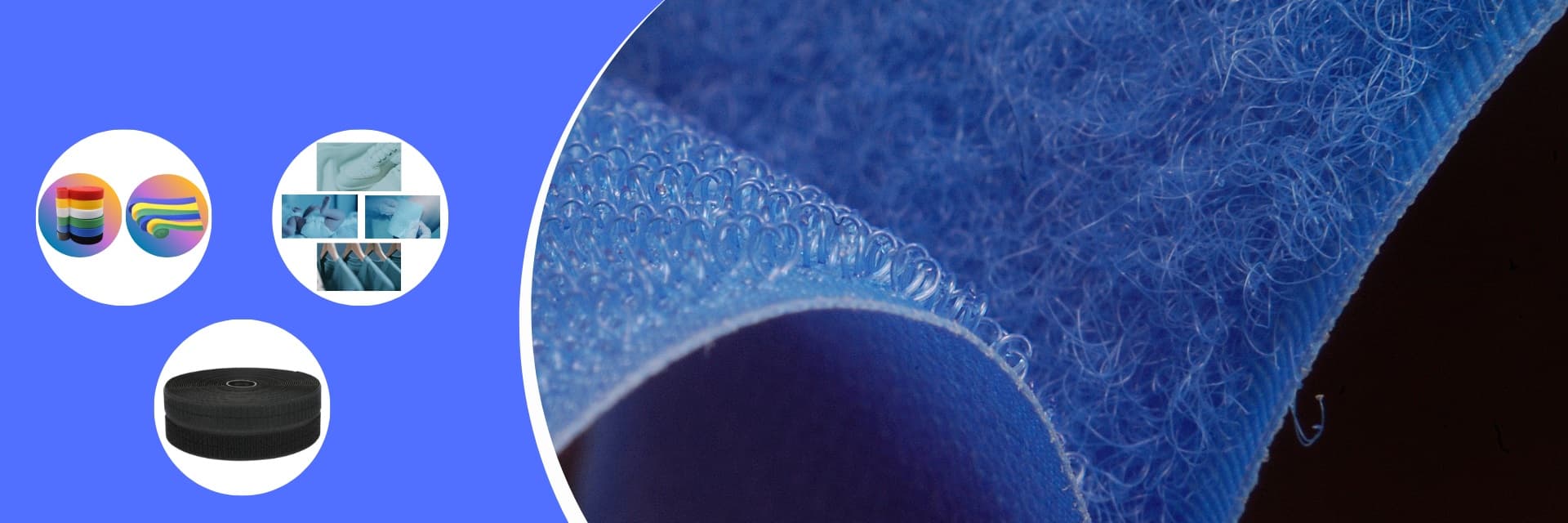
A hook and loop fastener is a reusable fastening system consisting of two parts:
Hook Side
The hook side contains thousands of small hook structures that engage with the loop material.
Loop Side
The loop side is a soft textile surface made from fiber loops that receive and hold the hooks.
When the two sides are pressed together, the hooks attach to the loops and create a secure connection.
Unlike permanent fastening methods, hook and loop can be opened and closed repeatedly while maintaining reliable performance.
Hook and Loop Fastener vs Button
Buttons are one of the most traditional fastening methods, especially in the apparel industry.
Advantages of Buttons
Buttons provide:
▪ Simple structure
▪ Low material cost
▪ Attractive appearance
▪ Various design options
Common applications include:
▪ Shirts
▪ Jackets
▪ Fashion clothing
▪ Decorative products
Limitations of Buttons
Slower Operation
Buttons require individual alignment and fastening, which can increase assembly time.
Limited Adjustment
Button positions are fixed and cannot provide continuous adjustment.
Additional Sewing Process
Buttons require sewing during production, which increases manufacturing steps.
Why Choose Hook and Loop Instead?
Compared with buttons, hook and loop offers:
| Feature | Hook and Loop | Button |
|---|---|---|
| Opening speed | Fast | Slow |
| Adjustment | Flexible | Fixed |
| Installation | Simple | Requires sewing |
| Repeated use | Excellent | Good |
Hook and loop is especially suitable for:
▪ Medical supports
▪ Baby products
▪ Workwear
▪ Protective equipment
where frequent adjustment is required.
Hook and Loop Fastener vs Zipper
Zippers are widely used in clothing, luggage, and outdoor products.
Advantages of Zippers
Zippers provide:
▪ Strong closure
▪ Smooth appearance
▪ Complete separation control
Common applications:
▪ Jackets
▪ Bags
▪ Outdoor equipment
▪ Luggage
Limitations of Zippers
Complex Mechanical Structure
Zippers contain multiple components such as sliders and teeth, which may cause:
▪ Sticking problems
▪ Component damage
▪ Difficult repairs
Fixed Closing Position
After closing, the position cannot be adjusted.
Higher Repair Difficulty
Damaged zippers usually require professional replacement.
Why Choose Hook and Loop Instead?
| Feature | Hook and Loop | Zipper |
|---|---|---|
| Operation | Quick | Moderate |
| Adjustment | Flexible | Fixed |
| Structure | Simple | Complex |
| Maintenance | Easy | More difficult |
Hook and loop is suitable for products requiring frequent opening, adjustment, and quick access.
Applications include:
▪ Sports equipment
▪ Medical products
▪ Protective clothing
▪ Industrial products
Hook and Loop Fastener vs Snap Fasteners
Snap fasteners are commonly used in clothing, accessories, and baby products.
Advantages of Snap Fasteners
They provide:
▪ Compact design
▪ Secure connection
▪ Clean appearance
▪ Good durability
Limitations of Snap Fasteners
Limited Adjustment
Snaps only connect at fixed positions.
Installation Equipment Required
Industrial production usually requires specialized installation machines.
Hard Contact Surface
Some snap materials may reduce comfort in products requiring soft contact.
Why Choose Hook and Loop Instead?
| Feature | Hook and Loop | Snap |
|---|---|---|
| Adjustability | Excellent | Limited |
| Comfort | Soft | Harder |
| Installation | Easy | Requires equipment |
| Application flexibility | High | Medium |
Hook and loop is often preferred for products requiring comfort and adjustable fitting.
Key Advantages of Hook and Loop Fasteners
1. Fast and Easy Operation
Hook and loop allows users to quickly:
▪ Attach
▪ Open
▪ Adjust
▪ Remove
without additional tools.
2. Excellent Reusable Performance
Depending on product structure and application environment, high-quality hook and loop products can withstand hundreds or thousands of opening and closing cycles.
Benefits include:
▪ Reduced replacement frequency
▪ Lower maintenance cost
▪ Longer product life
3. Flexible Adjustment
Unlike fixed-position fastening systems, hook and loop allows users to adjust the fastening position according to requirements.
Typical applications:
▪ Medical braces
▪ Sports equipment
▪ Safety products
4. Lightweight and Flexible Design
Compared with many mechanical fastening systems, hook and loop provides:
▪ Lower weight
▪ Better flexibility
▪ Improved user comfort
5. Multiple Material Options
Different applications require different materials.
Nylon Hook and Loop
Suitable for:
▪ Apparel
▪ Medical products
▪ Baby products
Features:
▪ Soft
▪ Flexible
▪ Wear resistant
Polyester Hook and Loop
Suitable for:
▪ Outdoor products
▪ Industrial applications
Features:
▪ Weather resistant
▪ Durable
Flame Resistant and High Temperature Hook and Loop
Suitable for:
▪ Protective clothing
▪ Aerospace
▪ Industrial environments
Features:
▪ Heat resistance
▪ Flame resistance
▪ High performance
Common Applications of Hook and Loop Fasteners
Apparel and Footwear
Used for:
▪ Shoes
▪ Jackets
▪ Sportswear
▪ Workwear
Advantages:
▪ Easy adjustment
▪ Fast operation
Medical Applications
Used for:
▪ Medical braces
▪ Support belts
▪ Orthopedic products
Advantages:
▪ Comfortable
▪ Adjustable
▪ Reliable
Baby Products
Used for:
▪ Baby diapers
▪ Baby clothing
▪ Hygiene products
Advantages:
▪ Soft contact
▪ Easy adjustment
Automotive Applications
Used for:
▪ Interior components
▪ Cable management
▪ Seat accessories
Industrial Applications
Used for:
▪ Equipment straps
▪ Tool organization
▪ Protective covers
▪ Cable fixing systems
How to Select the Right Fastening Method?
| Requirement | Recommended Solution |
|---|---|
| Fast opening and closing | Hook and Loop |
| Adjustable fastening | Hook and Loop |
| Decorative appearance | Button |
| Complete closure | Zipper |
| Compact connection point | Snap |
| High temperature environment | Aramid Hook and Loop |
The best fastening solution depends on:
▪ Application environment
▪ Required strength
▪ Product design
▪ Production requirements
Why Choose Our Hook and Loop Solutions?
As a professional hook and loop manufacturer, we provide:
▪ Nylon and polyester hook and loop products
▪ Industrial fastening solutions
▪ Adhesive hook and loop
▪ Flame resistant and high temperature products
▪ Customized widths and colors
▪ Technical support and export service
We help customers select suitable fastening solutions for different industries and applications.
Conclusion
Hook and loop fasteners provide a flexible, reusable, and efficient alternative to many traditional fastening methods.
Compared with buttons, zippers, and snaps, hook and loop offers advantages in:
▪ Operation speed
▪ Adjustment flexibility
▪ Installation convenience
▪ Reusable performance
While traditional fastening methods remain suitable for certain applications, hook and loop has become an important solution for industries requiring efficient, adjustable, and reliable fastening systems.
Choosing the right fastening method can improve product performance, user experience, and manufacturing efficiency.
Contact us for customized hook and loop fastening solutions.
Introduction
Selecting the right fastening system is an important decision for product designers, manufacturers, and engineers.
Different applications require different fastening characteristics, including:
▪ Fastening strength
▪ Opening and closing frequency
▪ Adjustment flexibility
▪ Product appearance
▪ Manufacturing efficiency
▪ Service life
Traditional fastening methods such as buttons, zippers, and snaps have been widely used in clothing, bags, medical products, and industrial applications.
However, with the development of modern manufacturing, many industries now require fastening solutions that are faster, more flexible, and easier to maintain.
Hook and loop fasteners have become an increasingly popular alternative because they provide:
▪ Quick attachment and release
▪ Adjustable positioning
▪ Lightweight structure
▪ Reusable performance
▪ Easy installation
As an experienced hook and loop manufacturer, we provide various fastening solutions, including nylon hook and loop, polyester hook and loop, adhesive hook and loop, and customized industrial fastening products.
This article explains the differences between hook and loop fasteners and traditional fastening methods, helping customers select the most suitable solution for their applications.
What Is a Hook and Loop Fastener?
A hook and loop fastener is a reusable fastening system consisting of two parts:
Hook Side
The hook side contains thousands of small hook structures that engage with the loop material.
Loop Side
The loop side is a soft textile surface made from fiber loops that receive and hold the hooks.
When the two sides are pressed together, the hooks attach to the loops and create a secure connection.
Unlike permanent fastening methods, hook and loop can be opened and closed repeatedly while maintaining reliable performance.
Hook and Loop Fastener vs Button
Buttons are one of the most traditional fastening methods, especially in the apparel industry.
Advantages of Buttons
Buttons provide:
▪ Simple structure
▪ Low material cost
▪ Attractive appearance
▪ Various design options
Common applications include:
▪ Shirts
▪ Jackets
▪ Fashion clothing
▪ Decorative products
Limitations of Buttons
Slower Operation
Buttons require individual alignment and fastening, which can increase assembly time.
Limited Adjustment
Button positions are fixed and cannot provide continuous adjustment.
Additional Sewing Process
Buttons require sewing during production, which increases manufacturing steps.
Why Choose Hook and Loop Instead?
Compared with buttons, hook and loop offers:
| Feature | Hook and Loop | Button |
|---|---|---|
| Opening speed | Fast | Slow |
| Adjustment | Flexible | Fixed |
| Installation | Simple | Requires sewing |
| Repeated use | Excellent | Good |
Hook and loop is especially suitable for:
▪ Medical supports
▪ Baby products
▪ Workwear
▪ Protective equipment
where frequent adjustment is required.
Hook and Loop Fastener vs Zipper
Zippers are widely used in clothing, luggage, and outdoor products.
Advantages of Zippers
Zippers provide:
▪ Strong closure
▪ Smooth appearance
▪ Complete separation control
Common applications:
▪ Jackets
▪ Bags
▪ Outdoor equipment
▪ Luggage
Limitations of Zippers
Complex Mechanical Structure
Zippers contain multiple components such as sliders and teeth, which may cause:
▪ Sticking problems
▪ Component damage
▪ Difficult repairs
Fixed Closing Position
After closing, the position cannot be adjusted.
Higher Repair Difficulty
Damaged zippers usually require professional replacement.
Why Choose Hook and Loop Instead?
| Feature | Hook and Loop | Zipper |
|---|---|---|
| Operation | Quick | Moderate |
| Adjustment | Flexible | Fixed |
| Structure | Simple | Complex |
| Maintenance | Easy | More difficult |
Hook and loop is suitable for products requiring frequent opening, adjustment, and quick access.
Applications include:
▪ Sports equipment
▪ Medical products
▪ Protective clothing
▪ Industrial products
Hook and Loop Fastener vs Snap Fasteners
Snap fasteners are commonly used in clothing, accessories, and baby products.
Advantages of Snap Fasteners
They provide:
▪ Compact design
▪ Secure connection
▪ Clean appearance
▪ Good durability
Limitations of Snap Fasteners
Limited Adjustment
Snaps only connect at fixed positions.
Installation Equipment Required
Industrial production usually requires specialized installation machines.
Hard Contact Surface
Some snap materials may reduce comfort in products requiring soft contact.
Why Choose Hook and Loop Instead?
| Feature | Hook and Loop | Snap |
|---|---|---|
| Adjustability | Excellent | Limited |
| Comfort | Soft | Harder |
| Installation | Easy | Requires equipment |
| Application flexibility | High | Medium |
Hook and loop is often preferred for products requiring comfort and adjustable fitting.
Key Advantages of Hook and Loop Fasteners
1. Fast and Easy Operation
Hook and loop allows users to quickly:
▪ Attach
▪ Open
▪ Adjust
▪ Remove
without additional tools.
2. Excellent Reusable Performance
Depending on product structure and application environment, high-quality hook and loop products can withstand hundreds or thousands of opening and closing cycles.
Benefits include:
▪ Reduced replacement frequency
▪ Lower maintenance cost
▪ Longer product life
3. Flexible Adjustment
Unlike fixed-position fastening systems, hook and loop allows users to adjust the fastening position according to requirements.
Typical applications:
▪ Medical braces
▪ Sports equipment
▪ Safety products
4. Lightweight and Flexible Design
Compared with many mechanical fastening systems, hook and loop provides:
▪ Lower weight
▪ Better flexibility
▪ Improved user comfort
5. Multiple Material Options
Different applications require different materials.
Nylon Hook and Loop
Suitable for:
▪ Apparel
▪ Medical products
▪ Baby products
Features:
▪ Soft
▪ Flexible
▪ Wear resistant
Polyester Hook and Loop
Suitable for:
▪ Outdoor products
▪ Industrial applications
Features:
▪ Weather resistant
▪ Durable
Flame Resistant and High Temperature Hook and Loop
Suitable for:
▪ Protective clothing
▪ Aerospace
▪ Industrial environments
Features:
▪ Heat resistance
▪ Flame resistance
▪ High performance
Common Applications of Hook and Loop Fasteners
Apparel and Footwear
Used for:
▪ Shoes
▪ Jackets
▪ Sportswear
▪ Workwear
Advantages:
▪ Easy adjustment
▪ Fast operation
Medical Applications
Used for:
▪ Medical braces
▪ Support belts
▪ Orthopedic products
Advantages:
▪ Comfortable
▪ Adjustable
▪ Reliable
Baby Products
Used for:
▪ Baby diapers
▪ Baby clothing
▪ Hygiene products
Advantages:
▪ Soft contact
▪ Easy adjustment
Automotive Applications
Used for:
▪ Interior components
▪ Cable management
▪ Seat accessories
Industrial Applications
Used for:
▪ Equipment straps
▪ Tool organization
▪ Protective covers
▪ Cable fixing systems
How to Select the Right Fastening Method?
| Requirement | Recommended Solution |
|---|---|
| Fast opening and closing | Hook and Loop |
| Adjustable fastening | Hook and Loop |
| Decorative appearance | Button |
| Complete closure | Zipper |
| Compact connection point | Snap |
| High temperature environment | Aramid Hook and Loop |
The best fastening solution depends on:
▪ Application environment
▪ Required strength
▪ Product design
▪ Production requirements
Why Choose Our Hook and Loop Solutions?
As a professional hook and loop manufacturer, we provide:
▪ Nylon and polyester hook and loop products
▪ Industrial fastening solutions
▪ Adhesive hook and loop
▪ Flame resistant and high temperature products
▪ Customized widths and colors
▪ Technical support and export service
We help customers select suitable fastening solutions for different industries and applications.
Conclusion
Hook and loop fasteners provide a flexible, reusable, and efficient alternative to many traditional fastening methods.
Compared with buttons, zippers, and snaps, hook and loop offers advantages in:
▪ Operation speed
▪ Adjustment flexibility
▪ Installation convenience
▪ Reusable performance
While traditional fastening methods remain suitable for certain applications, hook and loop has become an important solution for industries requiring efficient, adjustable, and reliable fastening systems.
Choosing the right fastening method can improve product performance, user experience, and manufacturing efficiency.
Contact us for customized hook and loop fastening solutions.
The Right Hook And Loop Solution. Endless Possibilities.
Stay Connected
Copyright © 2026 Shenzhen Huiyu Hengtong Development Co.,Ltd