
H H D
From Manufacturing to Installation: Complete Delivery Process of a Hook and Loop Backing Adhesive Machine
2025-05-15
 |
 |
Introduction
For hook and loop manufacturers, purchasing production equipment is not only about selecting the right machine. A successful equipment project also depends on professional manufacturing, strict quality control, reliable transportation, and effective installation support.
Especially for industrial machines such as hook and loop backing adhesive machines, international customers pay close attention to every stage of the project, from equipment production and testing to delivery and commissioning.
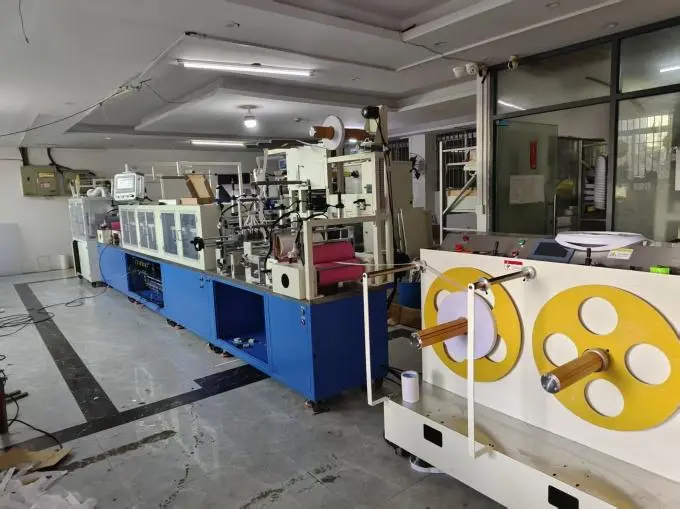
Recently, we completed the manufacturing and delivery of an automatic hook and loop backing adhesive machine for an overseas customer, providing full support throughout the entire project process.
This case demonstrates how professional equipment suppliers help customers achieve a smooth transition from equipment purchase to stable production operation.
1. Project Background: Supporting a Customer’s Production Expansion
The customer specializes in manufacturing hook and loop products for commercial and industrial applications.
With increasing market demand, the customer planned to upgrade its adhesive backing process and introduce a more reliable automated production solution.
Compared with traditional manual or semi-automatic methods, the customer expected the new equipment to provide:
▪ More stable adhesive coating
▪ Better production consistency
▪ Higher automation level
▪ Easier operation and maintenance
However, for overseas equipment investment, the customer was also concerned about:
▪ Machine reliability
▪ Delivery safety
▪ Installation efficiency
▪ Technical support after arrival
Therefore, they required not only equipment supply but also a complete project service process.
2. Customized Equipment Manufacturing Process
After confirming the customer's production requirements, our engineering team started the equipment design and manufacturing process.
Different from standard machines, the backing adhesive machine was adjusted according to the customer's production conditions, including:
▪ Product specifications
▪ Tape width range
▪ Adhesive requirements
▪ Production capacity expectations
During manufacturing, key components and systems were carefully inspected to ensure stable operation after delivery.
The production process included:
Mechanical Assembly
Main machine structures, transmission systems, and coating components were assembled according to technical standards.
Electrical System Integration
The PLC control system, sensors, heating system, and operating interface were installed and tested.
Trial Operation
Before shipment, the machine completed factory testing to verify:
▪ Running stability
▪ Temperature control accuracy
▪ Tape feeding performance
▪ Adhesive coating consistency
This process reduced potential adjustment time after arrival at the customer's factory.
3. Quality Inspection Before Shipment
Before delivery, the machine went through a complete inspection process.
The inspection focused on:
Equipment Performance
Testing included:
▪ Machine operation speed
▪ Control system response
▪ Heating stability
▪ Transmission accuracy
Production Simulation
The machine was tested under actual production conditions to simulate customer operation.
This allowed our engineers to identify and optimize possible issues before shipment.
Documentation Preparation
Complete technical documents were prepared, including:
▪ Operation manuals
▪ Electrical diagrams
▪ Maintenance instructions
▪ Spare parts information
These materials help customers operate the equipment more efficiently.
4. Professional Packaging for International Transportation
Because industrial production equipment usually involves large dimensions and heavy weight, safe packaging is a critical part of international delivery.
For this project, we applied professional export packaging methods.
Equipment Protection
Before packing:
▪ The machine surface was cleaned
▪ Key components were protected
▪ Anti-rust treatment was applied where necessary
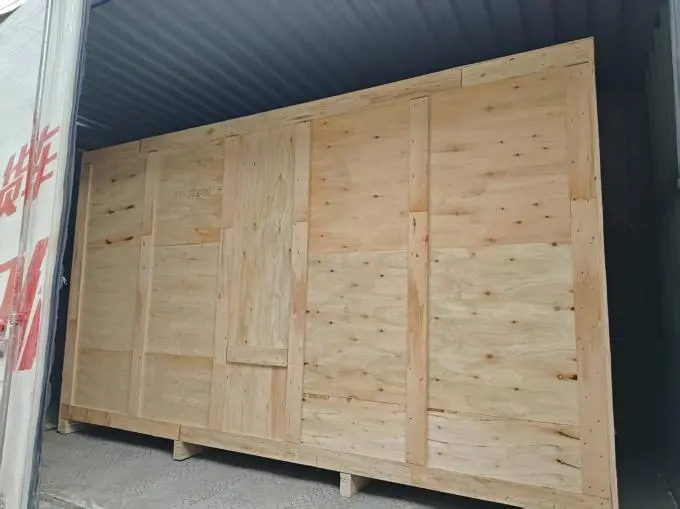
Reinforced Wooden Crate Packaging
The equipment was fixed inside a customized export wooden case.
Additional protection included:
▪ Shock-absorbing materials
▪ Reinforced support points
▪ Protection for sensitive components
This ensured the machine remained stable during:
▪ Factory handling
▪ Container transportation
▪ Long-distance shipping
5. Shipping Coordination and Customer Communication
International machine delivery requires close coordination between supplier, logistics company, and customer.
During transportation, we provided:
▪ Shipment status updates
▪ Estimated arrival information
▪ Documentation support
Before arrival, we also communicated with the customer regarding:
▪ Installation preparation
▪ Required tools
▪ Factory conditions
▪ Operator arrangement
This helped the customer prepare in advance and reduce installation delays.
6. Installation Support and Production Start-Up
After the machine arrived at the customer's factory, our technical team provided installation guidance.
Support included:
Machine Setup
Assistance with:
▪ Equipment positioning
▪ Electrical connection
▪ Parameter adjustment
Operator Training
The customer's operators received guidance on:
▪ Machine operation
▪ Daily maintenance
▪ Production adjustment
▪ Safety procedures
Trial Production
The machine was tested together with the customer team to confirm:
▪ Stable adhesive coating
▪ Smooth operation
▪ Production requirements
After commissioning, the customer successfully started normal production.
7. Project Value Beyond Equipment Supply
A successful machine delivery project is not only about shipping equipment.
It also requires:
▪ Engineering communication
▪ Manufacturing management
▪ Quality control
▪ Logistics coordination
▪ Technical support
Through this complete project service process, customers can reduce risks when introducing new production equipment and achieve faster production startup.
Conclusion
The delivery of a hook and loop backing adhesive machine involves multiple important stages, from customized manufacturing and factory testing to export packaging, transportation, installation, and technical support.
By providing a complete equipment service process, we help global hook and loop manufacturers introduce reliable production solutions with greater confidence.
Our company continues to support customers worldwide with customized machinery solutions, professional engineering services, and long-term technical cooperation.
|
|
Introduction
For hook and loop manufacturers, purchasing production equipment is not only about selecting the right machine. A successful equipment project also depends on professional manufacturing, strict quality control, reliable transportation, and effective installation support.
Especially for industrial machines such as hook and loop backing adhesive machines, international customers pay close attention to every stage of the project, from equipment production and testing to delivery and commissioning.
Recently, we completed the manufacturing and delivery of an automatic hook and loop backing adhesive machine for an overseas customer, providing full support throughout the entire project process.
This case demonstrates how professional equipment suppliers help customers achieve a smooth transition from equipment purchase to stable production operation.
1. Project Background: Supporting a Customer’s Production Expansion
The customer specializes in manufacturing hook and loop products for commercial and industrial applications.
With increasing market demand, the customer planned to upgrade its adhesive backing process and introduce a more reliable automated production solution.
Compared with traditional manual or semi-automatic methods, the customer expected the new equipment to provide:
▪ More stable adhesive coating
▪ Better production consistency
▪ Higher automation level
▪ Easier operation and maintenance
However, for overseas equipment investment, the customer was also concerned about:
▪ Machine reliability
▪ Delivery safety
▪ Installation efficiency
▪ Technical support after arrival
Therefore, they required not only equipment supply but also a complete project service process.
2. Customized Equipment Manufacturing Process
After confirming the customer's production requirements, our engineering team started the equipment design and manufacturing process.
Different from standard machines, the backing adhesive machine was adjusted according to the customer's production conditions, including:
▪ Product specifications
▪ Tape width range
▪ Adhesive requirements
▪ Production capacity expectations
During manufacturing, key components and systems were carefully inspected to ensure stable operation after delivery.
The production process included:
Mechanical Assembly
Main machine structures, transmission systems, and coating components were assembled according to technical standards.
Electrical System Integration
The PLC control system, sensors, heating system, and operating interface were installed and tested.
Trial Operation
Before shipment, the machine completed factory testing to verify:
▪ Running stability
▪ Temperature control accuracy
▪ Tape feeding performance
▪ Adhesive coating consistency
This process reduced potential adjustment time after arrival at the customer's factory.
3. Quality Inspection Before Shipment
Before delivery, the machine went through a complete inspection process.
The inspection focused on:
Equipment Performance
Testing included:
▪ Machine operation speed
▪ Control system response
▪ Heating stability
▪ Transmission accuracy
Production Simulation
The machine was tested under actual production conditions to simulate customer operation.
This allowed our engineers to identify and optimize possible issues before shipment.
Documentation Preparation
Complete technical documents were prepared, including:
▪ Operation manuals
▪ Electrical diagrams
▪ Maintenance instructions
▪ Spare parts information
These materials help customers operate the equipment more efficiently.
4. Professional Packaging for International Transportation
Because industrial production equipment usually involves large dimensions and heavy weight, safe packaging is a critical part of international delivery.
For this project, we applied professional export packaging methods.
Equipment Protection
Before packing:
▪ The machine surface was cleaned
▪ Key components were protected
▪ Anti-rust treatment was applied where necessary
Reinforced Wooden Crate Packaging
The equipment was fixed inside a customized export wooden case.
Additional protection included:
▪ Shock-absorbing materials
▪ Reinforced support points
▪ Protection for sensitive components
This ensured the machine remained stable during:
▪ Factory handling
▪ Container transportation
▪ Long-distance shipping
5. Shipping Coordination and Customer Communication
International machine delivery requires close coordination between supplier, logistics company, and customer.
During transportation, we provided:
▪ Shipment status updates
▪ Estimated arrival information
▪ Documentation support
Before arrival, we also communicated with the customer regarding:
▪ Installation preparation
▪ Required tools
▪ Factory conditions
▪ Operator arrangement
This helped the customer prepare in advance and reduce installation delays.
6. Installation Support and Production Start-Up
After the machine arrived at the customer's factory, our technical team provided installation guidance.
Support included:
Machine Setup
Assistance with:
▪ Equipment positioning
▪ Electrical connection
▪ Parameter adjustment
Operator Training
The customer's operators received guidance on:
▪ Machine operation
▪ Daily maintenance
▪ Production adjustment
▪ Safety procedures
Trial Production
The machine was tested together with the customer team to confirm:
▪ Stable adhesive coating
▪ Smooth operation
▪ Production requirements
After commissioning, the customer successfully started normal production.
7. Project Value Beyond Equipment Supply
A successful machine delivery project is not only about shipping equipment.
It also requires:
▪ Engineering communication
▪ Manufacturing management
▪ Quality control
▪ Logistics coordination
▪ Technical support
Through this complete project service process, customers can reduce risks when introducing new production equipment and achieve faster production startup.
Conclusion
The delivery of a hook and loop backing adhesive machine involves multiple important stages, from customized manufacturing and factory testing to export packaging, transportation, installation, and technical support.
By providing a complete equipment service process, we help global hook and loop manufacturers introduce reliable production solutions with greater confidence.
Our company continues to support customers worldwide with customized machinery solutions, professional engineering services, and long-term technical cooperation.
The Right Hook And Loop Solution. Endless Possibilities.
Stay Connected
Copyright © 2026 Shenzhen Huiyu Hengtong Development Co.,Ltd